
Ask almost anyone in Southeast Asia what colonialism left behind and the answers tend to be familiar. Railways. Ports. Modern bureaucracy. Legal systems. Schools. Integration into the global economy. In Singapore especially, colonialism is often remembered as the starting point of the country’s journey towards prosperity and statehood.
Yet there is another question that receives far less attention: What did colonialism take away?
Posing that question does not require us to romanticise the past. The pre-colonial Malay world was hardly free from conflict. Kingdoms competed with one another, alliances shifted, and political rivalries were common. But acknowledging those realities should not obscure another fact: colonial rule fundamentally changed the trajectory of the region and reshaped how its peoples came to understand themselves and their place in history.
Perhaps the most significant loss was the weakening of a shared civilisational consciousness.
A World Before Borders
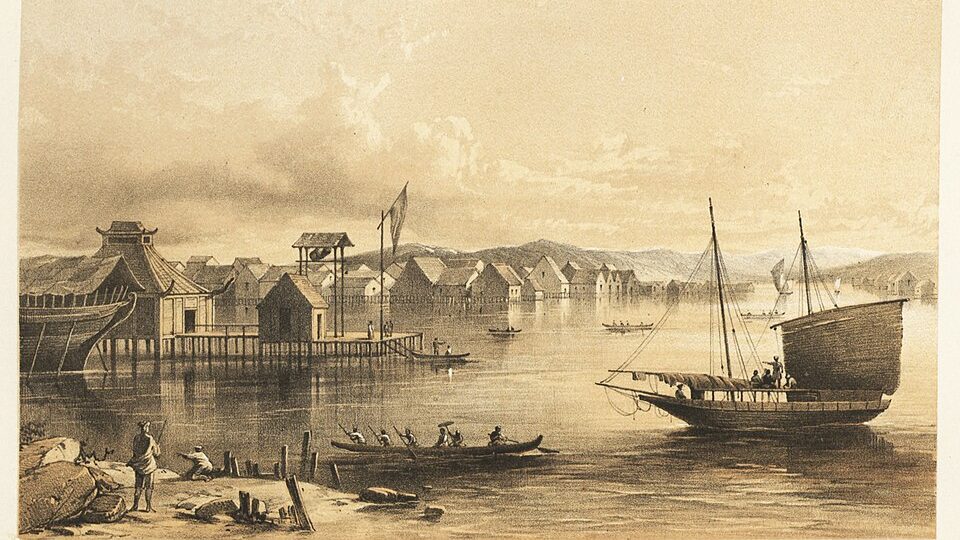
Long before the borders of Singapore, Malaysia, Indonesia, and Brunei came into being, much of the region formed part of an interconnected world commonly described as Alam Melayu. It was not a nation-state in the modern sense, nor was it governed by a single political authority. Instead, it was a civilisational space held together by language, commerce, kinship, religion, and maritime connections.
People moved between ports and settlements with relative ease. Goods and ideas travelled across the seas. Communities formed relationships that stretched beyond any one kingdom or polity. The sea connected rather than separated. Identity itself was often more fluid than today’s national categories suggest.
The Fragmentation of a Shared Civilisational Space

Colonialism reordered this world.
European powers did more than occupy territory. They drew borders, established new administrative units, and reorganised societies according to imperial priorities. Communities that had once existed within overlapping networks gradually found themselves living under separate colonial systems, many of which later became independent nation-states.
There is nothing inherently problematic about nation-states. They are the political realities of our time and provide meaningful sources of identity and belonging. Yet their emergence also came with costs.
Today, most of us instinctively see ourselves as Singaporean, Malaysian, Indonesian, or Bruneian. These identities matter. At the same time, they can make it harder to appreciate the deeper historical relationships that once connected the peoples of the Malay world.
How Empire Reshaped Authority and Historical Consciousness
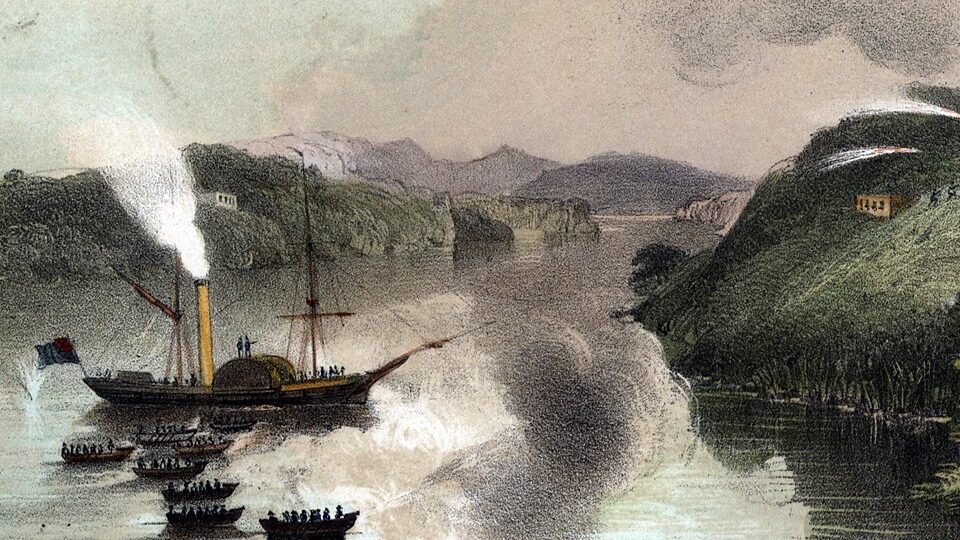
Colonial rule also transformed structures of power and ways of remembering the past.
Across the region, indigenous centres of authority were subordinated, adapted, or incorporated into colonial administrations. Economic priorities changed. Systems of governance were redesigned. Even knowledge increasingly came to be filtered through colonial institutions.
Perhaps even more consequential was the influence of colonial archives on historical memory.
Much of what we know about the Malay world is preserved in records produced by colonial administrators and observers. These sources are invaluable, but they are not neutral. They reflect particular perspectives and priorities. Over time, they helped produce narratives in which the arrival of colonial powers became the central turning point of regional history.
The effects are easy to miss. Many of us can name colonial settlements and administrators more readily than we can describe the maritime networks and interconnected societies that preceded European rule. Colonialism transformed political and economic realities, but it also narrowed the way many of us imagine the past.
The Cost of Forgetting

Perhaps this narrowing of historical imagination is the greatest loss of all.
It is often easier for us to think about the Malay world through colonial and national frameworks than to imagine it as a vibrant and interconnected civilisation whose history long predates empire. We readily recognise what colonialism built, yet struggle to picture the worlds that existed before it.
Remembering Alam Melayu is not a call to abandon modern identities or to return to an idealised past. History does not work that way. Rather, it is an invitation to recover a deeper and more complex understanding of the region.
Recovering Historical Depth in an Age of Borders

To remember Alam Melayu is to recognise that the peoples of this region share histories that extend beyond the boundaries inherited from colonial rule. Before we became separate colonies and later independent states, we were also participants in broader networks of exchange, memory, and cultural affinity.
If we remember only what colonialism built, we risk mistaking one chapter of our history for the whole story. Our histories neither began with empire nor were they entirely defined by it.
The task before us is therefore not to reject modernity or erase the colonial experience. It is to widen our historical lens and acknowledge losses that cannot be measured by economic indicators alone: the fragmentation of a shared civilisational consciousness, the marginalisation of indigenous perspectives, and the fading memory of connections that once bound the peoples of the Malay world together.
Perhaps decolonising historical imagination begins with something simple: remembering that before borders and imperial categories came to define the region, there already existed a world of relationships and connections that deserves to be remembered on its own terms.
 The Indigenous Narrative