
The idea that Malays are not suited for business is not a cultural truth. It is a stereotype shaped by history, repeated often enough to feel like fact. It surfaces in casual conversations, hiring assumptions, and even policy discussions, usually framed as a question of mindset or values. Over time, it has shifted from suggestion to quiet consensus. But this narrative does not hold up when placed against the historical record.
Before colonisation, the Malay world was not a peripheral player in global trade. It was one of its central hubs. Empires such as Srivijaya and the Sultanate of Malacca anchored vast maritime networks that connected China, India, and the Arab world. These were not loose or informal systems. Trade operated through established legal codes, systems of credit, diplomatic agreements, and deeply embedded commercial practices. Ports in the region were dense with activity, drawing merchants from across continents, many of whom conducted business under Malay governance and within Malay legal frameworks.
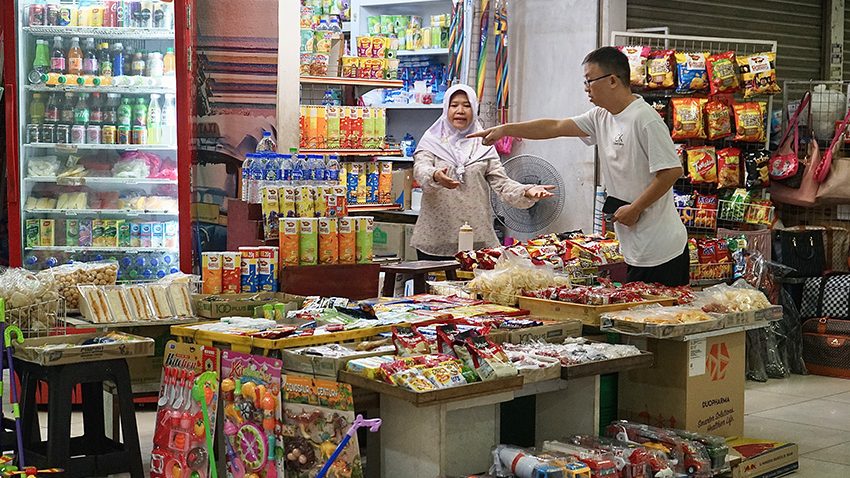
Malay became the lingua franca of trade not through imposition, but through utility. It was the language that enabled transactions across cultures and geographies because of how widely Malay merchants were embedded within regional networks. Commercial knowledge was accumulated, refined, and passed across generations. This was an ecosystem built on trust, continuity, and scale.
What changed was not capability, but the structure within which that capability operated. Colonisation introduced a fundamentally different economic order. European administrations reorganised production, labour, and capital along racial and functional lines. Malays were largely positioned within rural and agrarian sectors, while trade, finance, and industrial activity became concentrated elsewhere. This was not incidental. It was designed.

The fragmentation of the Malay world through agreements such as the Anglo-Dutch Treaty weakened long-standing commercial networks. Regions that had once functioned as part of a connected system were divided into separate administrative and economic units. Trade routes were disrupted, and access to capital, infrastructure, and institutional support became unevenly distributed.
By independence, these imbalances were deeply embedded. Malays were underrepresented in urban and commercial sectors not because of cultural preference, but because they had been systematically excluded from them over generations. The transition to independence did not reset these conditions. It carried them forward.

Today, the effects remain visible across the region. In Singapore, Malays continue to face gaps in income, education, and representation in certain industries. In Malaysia, structural interventions like the New Economic Policy addressed some disparities but left ongoing challenges around access to capital and networks. In Indonesia, indigenous Malay communities have experienced similar patterns of marginalisation within formal economic systems.
These outcomes are often misread as cultural limitations. But the pattern is consistent across contexts. Where Malays have access to capital, networks, mentorship, and fair market conditions, they build successful businesses. Where those conditions are absent, progress is constrained. The issue is not capability. It is access.

That distinction matters because it shifts the solution. If the problem is structural, then the response must be structural. Economic participation is built through ecosystems, not isolated effort. The pre-colonial Malay world functioned as one: interconnected, trust-based, and self-reinforcing.
Rebuilding that requires intention. It means strengthening connections between entrepreneurs across the region, expanding access to capital, and creating mentorship structures grounded in our own context. It also means correcting the narrative, because perception shapes opportunity.

The Malay world was once deeply commercial and globally connected. That foundation was disrupted, not erased. What remains is the work of rebuilding it in a form that reflects both history and present realities.
This is an open invitation.
If you are a founder, investor, operator, or builder who believes in creating a more connected and equitable indigenous business ecosystem, there is a role for you in this. Whether you are Malay or not, whether you are established or just starting out, what matters is a shared commitment to building something that lasts.
This is not about proving a point. It is about changing outcomes.
And that only happens if we build it together.
 The Indigenous Narrative