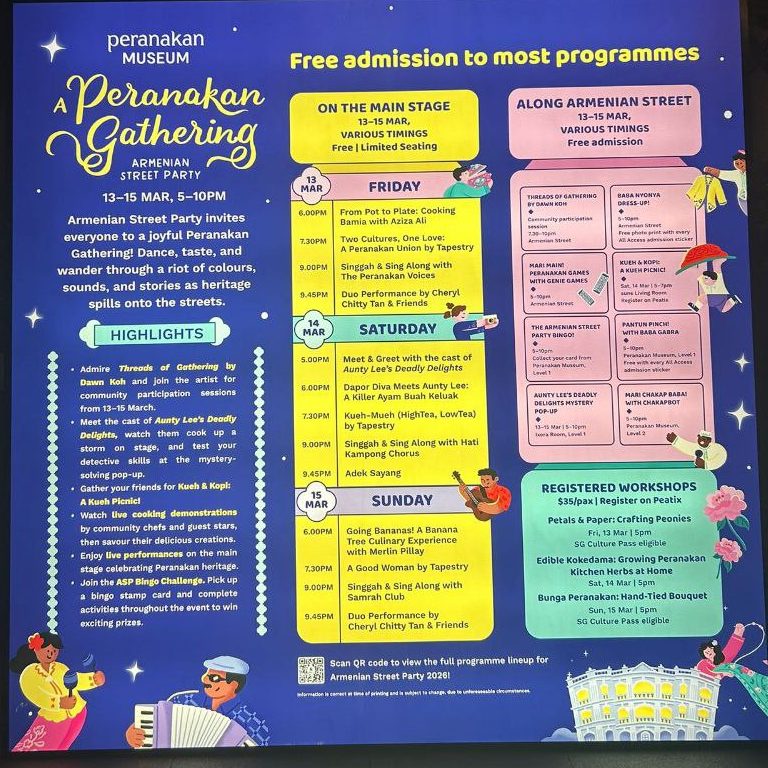
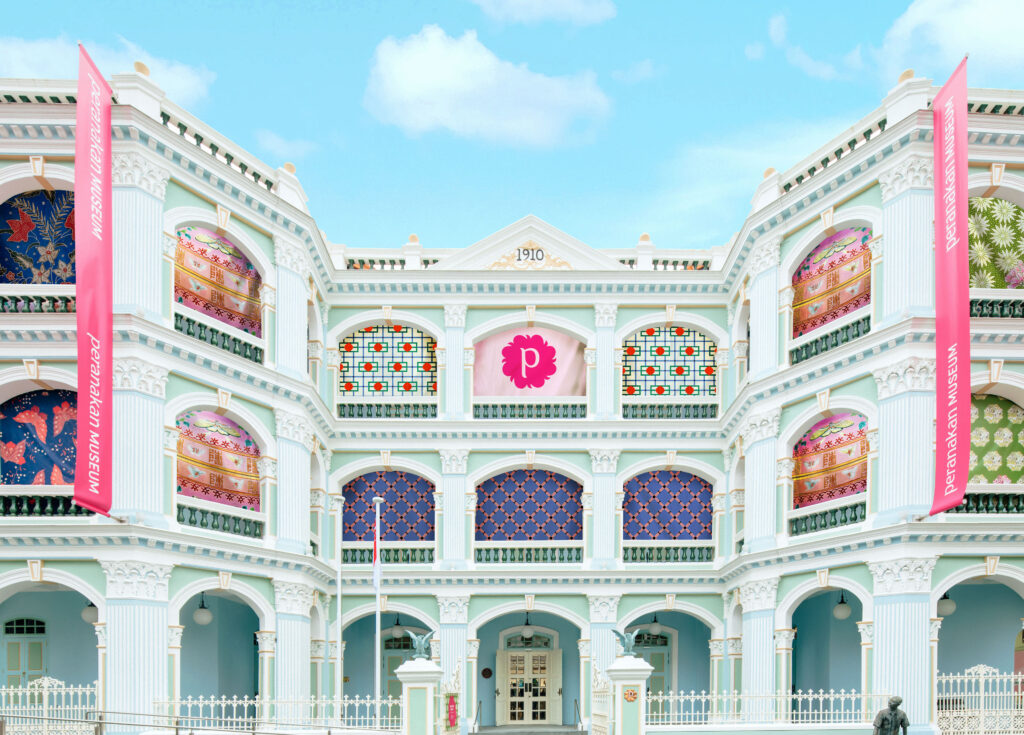
Last weekend, the streets of Armenian Street came alive. Vibrant colours, the smell of food, live music – all spilling out from the Peranakan Museum’s A Peranakan Gathering. Cooking demos. Performances. Workshops. Free admission. Three nights, until 10PM.
It was beautifully executed. And if you know anything about Peranakan history, you’ll know this: much of what was on display – the food, the music, the dress, the customs – has deep, undeniable roots in Malay culture.
So here is the question that sat with me long after the lights went down: Where are we?
The Peranakan Story Is Also a Malay Story
The Peranakan community built an identity through genuine cultural fusion – and there is beauty in that. But let’s be honest about what it drew from. The baju kurung. The kebaya. Laksa. Rojak. The beadwork, the music, the domestic rituals – shaped profoundly by Malay culture, Malay women, and Malay ways of life.
When an institution celebrates Peranakan heritage with that kind of resources and visibility, it is – whether intentionally or not – celebrating a culture that borrowed heavily from ours. The question is not whether that celebration should happen. The question is: why is it always someone else doing the celebrating?
The Real Question Nobody Wants to Ask
When did you last see a Malay cultural event with this kind of energy? Not a Hari Raya light-up. Not a televised dikir barat competition. Not a heritage corner in a shopping mall. A genuine, street-level, immersive celebration of Malay culture – one that draws in people who aren’t already Malay, that teaches, that invites, that makes people feel something.
I’m asking seriously: when?
Because if the answer is “I can’t think of one,” that is not a gap in programming. That is a failure of vision.
Malay Heritage Foundation: We Need to Talk
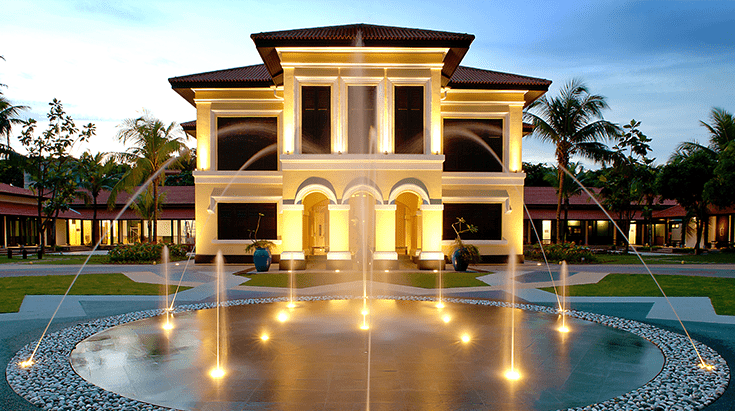
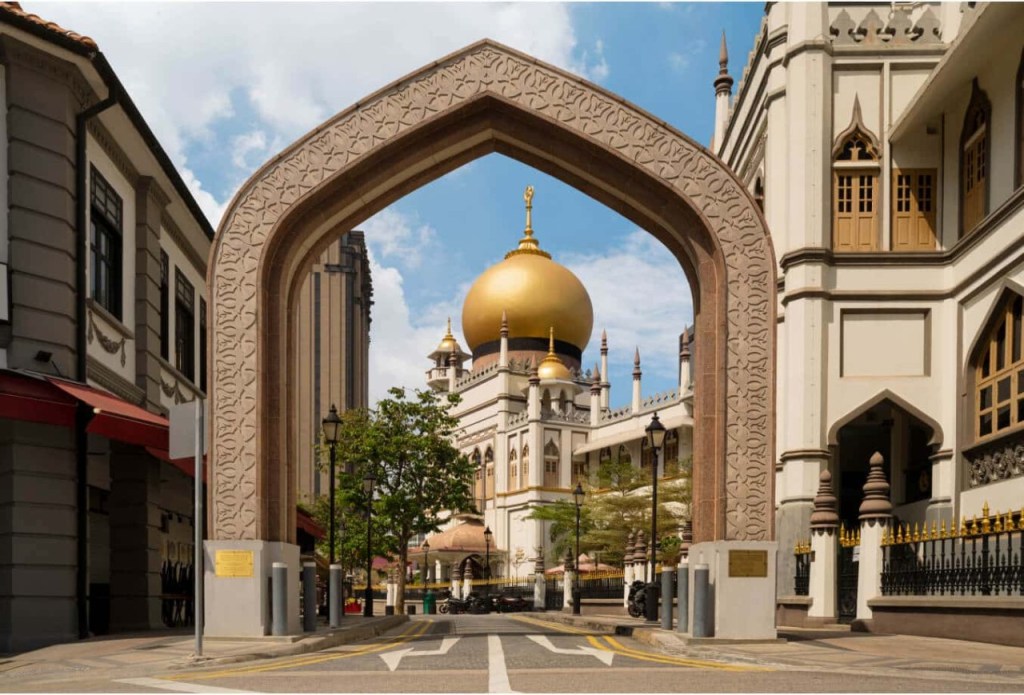
Let’s be specific. The Malay Heritage Foundation has the institutional mandate, the funding, and the Malay Heritage Centre – a beautifully restored building in the heart of Kampong Glam, one of the most visited cultural districts in Singapore. It has everything most cultural advocates could only dream of.
So what is being done with all of that?
Because from where many of us are standing, the answer looks like rotating exhibitions and occasional programming – a building that too often feels like a museum in the most static sense. A place you visit once, walk through quietly, and leave having learned something but felt very little.
Compare that to Armenian Street last weekend. The energy. The accessibility. The joy. Then ask yourself why the institution sitting on Malay heritage ground, in a historic Malay district, is not the one producing that kind of moment.
This is not an attack. It is an expectation. The community deserves more than preservation – it deserves activation. The Malay Heritage Foundation has every tool it needs. The question is whether there is the will and the creativity to actually use them.
A Lost Opportunity – Right in the Middle of Our Most Sacred Season
Here is what makes this sting even more: the Peranakan Gathering happened during Ramadan, with Hari Raya just weeks away.
Ramadan is not simply a religious obligation. It is one of the most culturally rich periods of the Malay year – the bazaar Ramadan, the breaking of fast with family, the late nights, the bubur lambuk, the heightened sense of community. And Hari Raya is not just a religious holiday. It is baju Melayu and baju kurung, ketupat and rendang, open houses and old songs and reunions. It is culture in its fullest, most living form.
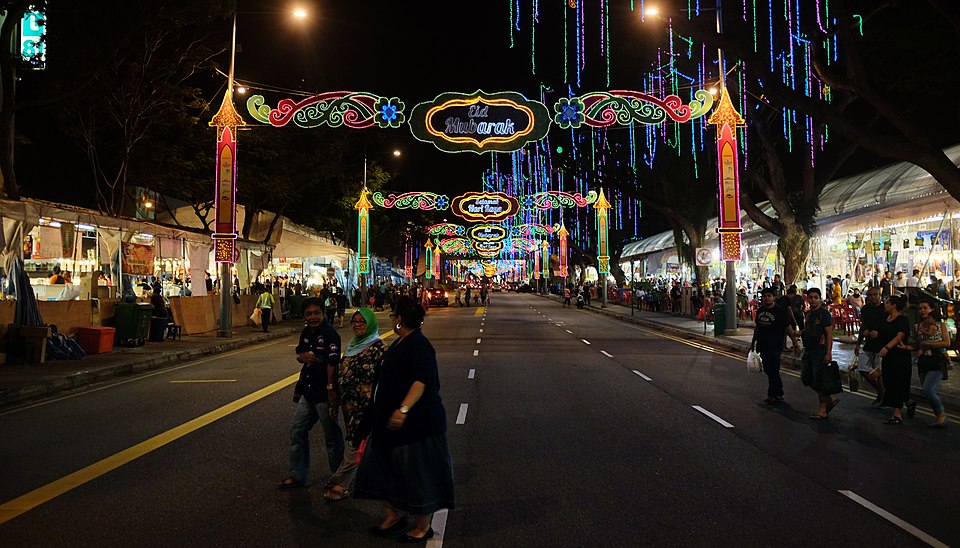
This was the moment. The single most culturally resonant season in the Malay calendar – and it passed without a single large-scale, public celebration of who we are and where we come from. No street party. No immersive experience. No moment that said to the rest of Singapore: this is our culture, come and witness it.
That is not just something to feel. That is a lost opportunity. And it cannot keep happening.
This Is Not Just a Singapore Problem
Zoom out. The Malay world spans hundreds of millions of people across Malaysia, Indonesia, Brunei, the southern Philippines, and the diaspora. One of the richest, most layered, most musically complex cultural traditions on earth.
And yet the global narrative is too often written by others. The culture exists in pieces – in the work of individual artists, musicians, chefs, and storytellers carrying it forward almost in spite of the institutions around them. It has not been given the platform, the ambition, or the strategic vision it deserves.
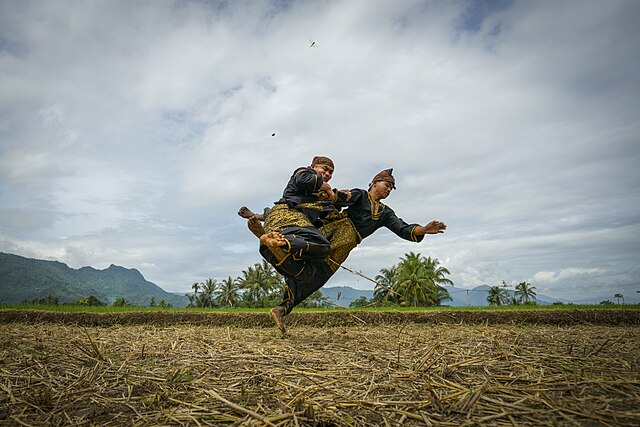
The raw material is extraordinary. The music alone – ghazal, joget, zapin, asli – could fill a month of programming. The cuisine. The textiles. The oral traditions. The stories that stretch back centuries across an archipelago that shaped the world’s trade routes, its languages, its religions.
We have everything we need. What is missing is the will to use it.
Let’s Build It – A Call for Collaboration
The passion exists. There are Malay artists, chefs, musicians, designers, historians, and storytellers who are ready to do something like this. People who carry this culture in their hands and their voices.
But passion without platform goes nowhere. The honest reality is that many are knowledgeable and driven but lack the networks, the infrastructure, and the institutional support to turn vision into reality. They are working in isolation when they should be working together.
The Indigenous Narrative wants to change that.
If you want to be part of building a street-level, community-driven, immersive Malay cultural event in Singapore – we want to hear from you. Performers. Cooks. Craftspeople. Educators. Designers. Producers. Anyone who has been sitting on an idea waiting for the right moment.
We are not waiting for permission. The conversation starts now.
Reach out. Let’s build.
Final Thought
The next time a beautifully produced celebration of a culture that borrowed from ours fills the streets of our city while our institutions stay quiet – let that mean something.
Let it be fuel.
Our culture is not a footnote in someone else’s heritage story. It is the story. And it is long past time we acted like it.
 The Indigenous Narrative