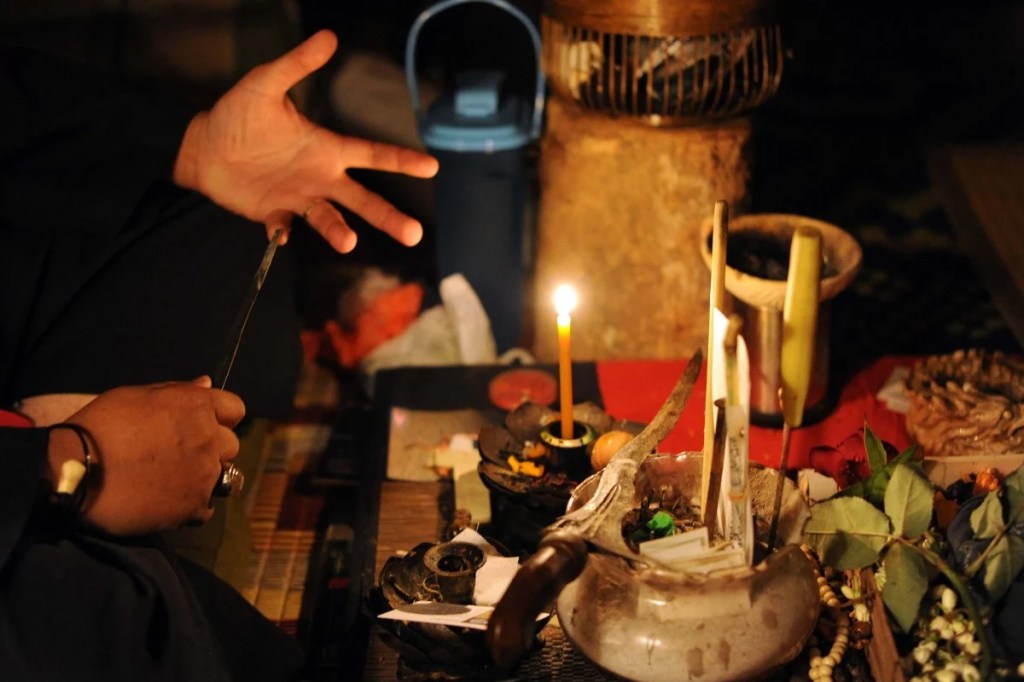
For all its modernisation, the Malay world still carries an undercurrent rarely captured in policy papers or tourism brochures, a complex belief system magic.
Far from fringe superstition, these practices are deeply rooted in Malay cultural history, shaping social norms, village dynamics, traditional healing, and even the way communities interpret conflict or protection.
Here is a breakdown of some of the most notable and widely discussed forms of mystical practices and beliefs in the Malay culture.
1. Tuju-Tuju (The Fiery Projectile of Lethal Intent)

Often sensationalised, tuju-tuju remains one of the most feared forms of Malay black magic. In cultural accounts collected across the peninsula, tuju-tuju is commonly described as a flamin ball or streak of fire launched across the sky by a practitioner targeting a victim.
The intent is almost always lethal.
While outsiders may interpret these descriptions metaphorically, within traditional Malay contexts, sightings of unexplained aerial fireballs were frequently associated with curses, revenge, or spiritual assault. Tuju-tuju occupies a space where fear, unexplained natural phenomena, and community tension intersect.
Its existence in cultural consciousness reflects a deeper social reality: in environments where conflict is rarely confrontational, hostility sometimes expresses itself through the unseen.
2. Santau (Black Magic Administered Through Food or Drinks)

Among the most widely acknowledged and openly discussed forms of ilmu hitam, santau is believed to be a curse delivered through food, drink, or contaminated materials.
Because it exploits trust, santau carries a heavier psychological weight than most other mystical practices. Many traditional cases were tied to jealousy, revenge, or unresolved disputes.
What makes santau particularly unsettling is its blend of:
●social betrayal,
●spiritual manipulation, and
●physical harm.
It is both a cultural warning and a symbol of how dangerous hidden resentment can be in tightly knit societies.
3. Pelesit (Jinn-Based Surveillance in the Form of an Insect)
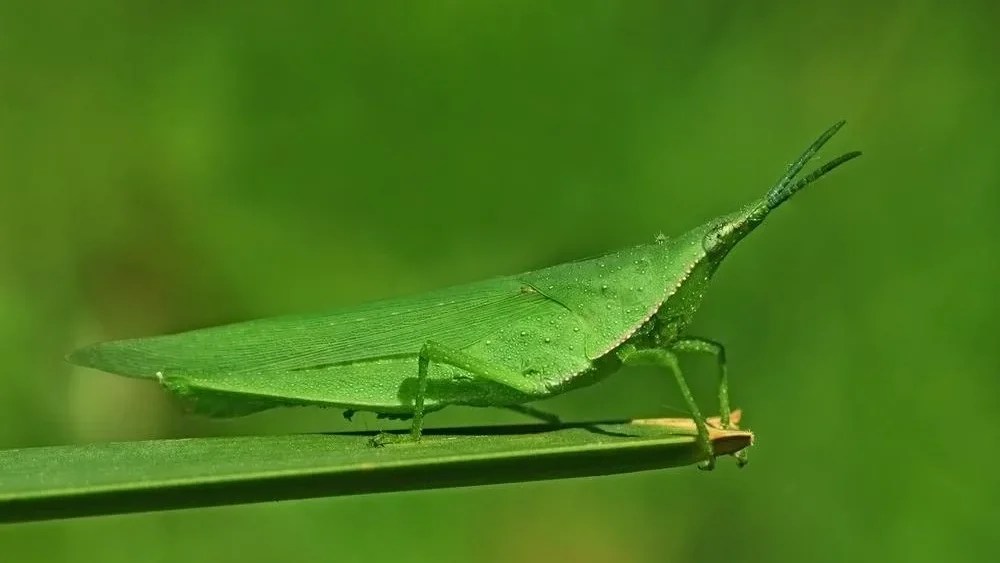
The pelesit is culturally understood as a spiritual spy. Traditionally, it is believed to be a jinn commanded by a practitioner and sent out disguised as an insect, typically a cricket or grasshopper.
Its purpose: to gather information, infiltrate households, or disturb the target.
Pelesit is often paired with narratives of control, manipulation, and unethical spiritual leverage. In an age before digital surveillance, this was the Malay world’s vocabulary for invisible intrusion, the idea that your private life could be monitored through forces beyond human perception.
It reveals a very real cultural anxiety: privacy is fragile where the spiritual realm is believed to be porous.
4. Susuk (Charms of Beauty, Influence, and Charisma)

While technically part of the occult, susuk occupies a complicated position in Malay culture. It is linked not to harm, but to enhancement – beauty, presence, confidence, or magnetic appeal.
Traditionally involving charms or spiritually empowered objects like needles or pieces of precious metals, susuk was historically associated with performers, dancers, aristocrats, and individuals seeking influence.
What makes susuk notable is not the supernatural claims, but the social narrative it represents: the pressures of beauty, desirability, and public perception in Malay society.
It blurs the line between confidence and dependence, between empowerment and illusion.
5. Ilmu Kebal (The Quest for Invulnerability)

A major component of Southeast Asian martial art culture, ilmu kebal refers to mystical practices believed to grant physical invulnerability, especially to blades or weapons.
Historically tied to silat practitioners, warriors, and traditional protectors, ilmu kebal reflects the
Malay world’s merging of:
● martial art heritage,
● spiritual protection,
● and belief in supernatural resilience.
Even today, stories persist of individuals who claim to resist cuts, stabs, or injuries during ritual demonstrations, whether interpreted spiritually, psychologically, or performatively.
Ilmu kebal endures because it speaks to a universal human desire: to feel protected in a world full of danger.
Why These Beliefs Still Matter

These practices are not relics of a forgotten era, they are active cultural reference points across Malaysia, Singapore, Indonesia, Brunei, and southern Thailand.
They influence behaviour, shape taboos, and frame how communities interpret misfortune, conflict, admiration, or protection.
To understand Malay culture fully, one must acknowledge this unseen dimension. Not to sensationalise it, but to recognise the profound role it plays in the collective psyche.
 The Indigenous Narrative