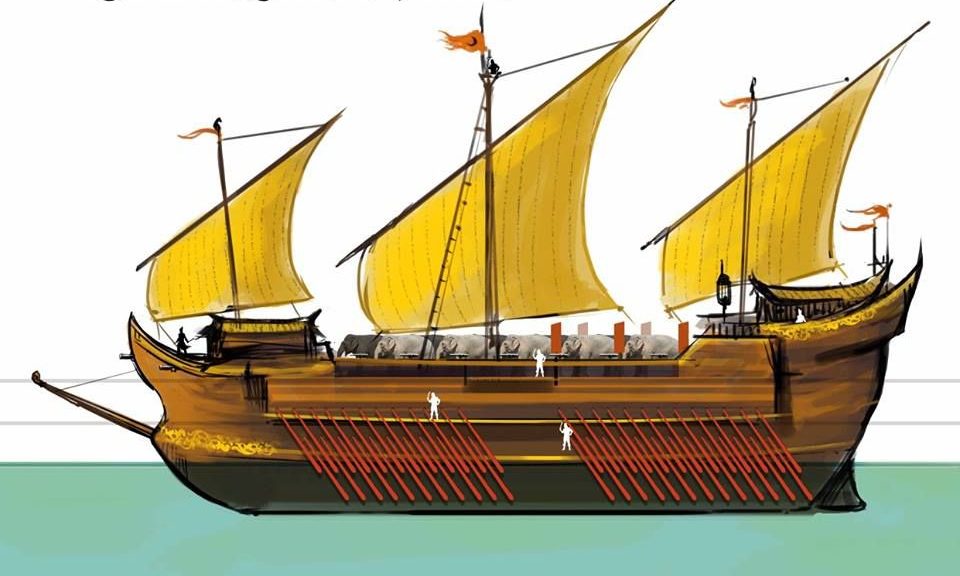
For most of the last five centuries, the Mendam Berahi lived only in the imagination, half ship, half apparition. In the Hikayat Hang Tuah, the vessel gleams like a fever dream of Malacca’s golden age: a colossal royal galley built in secrecy, lacquered black, outfitted for diplomatic splendour, and entrusted to the Sultan’s most loyal admiral. It was the sort of ship that made foreign envoys write hurried letters home about the ambitions of a rising maritime empire.
But until recently, most historians placed the Mendam Berahi in a category politely called semi-mythic. Beautiful, but inconvenient. Inspiring, but unlikely. The consensus held that no such mega-vessel existed in 15th-century Malacca. The epic, scholars argued, retrofitted later maritime technologies onto an earlier setting, making the ship anachronistic, more a literary symbol of prestige than a record of real naval capacity.
Then, in late October, the sea gave up an old secret.
A Ship Emerges from the Mud of Pulau Melaka
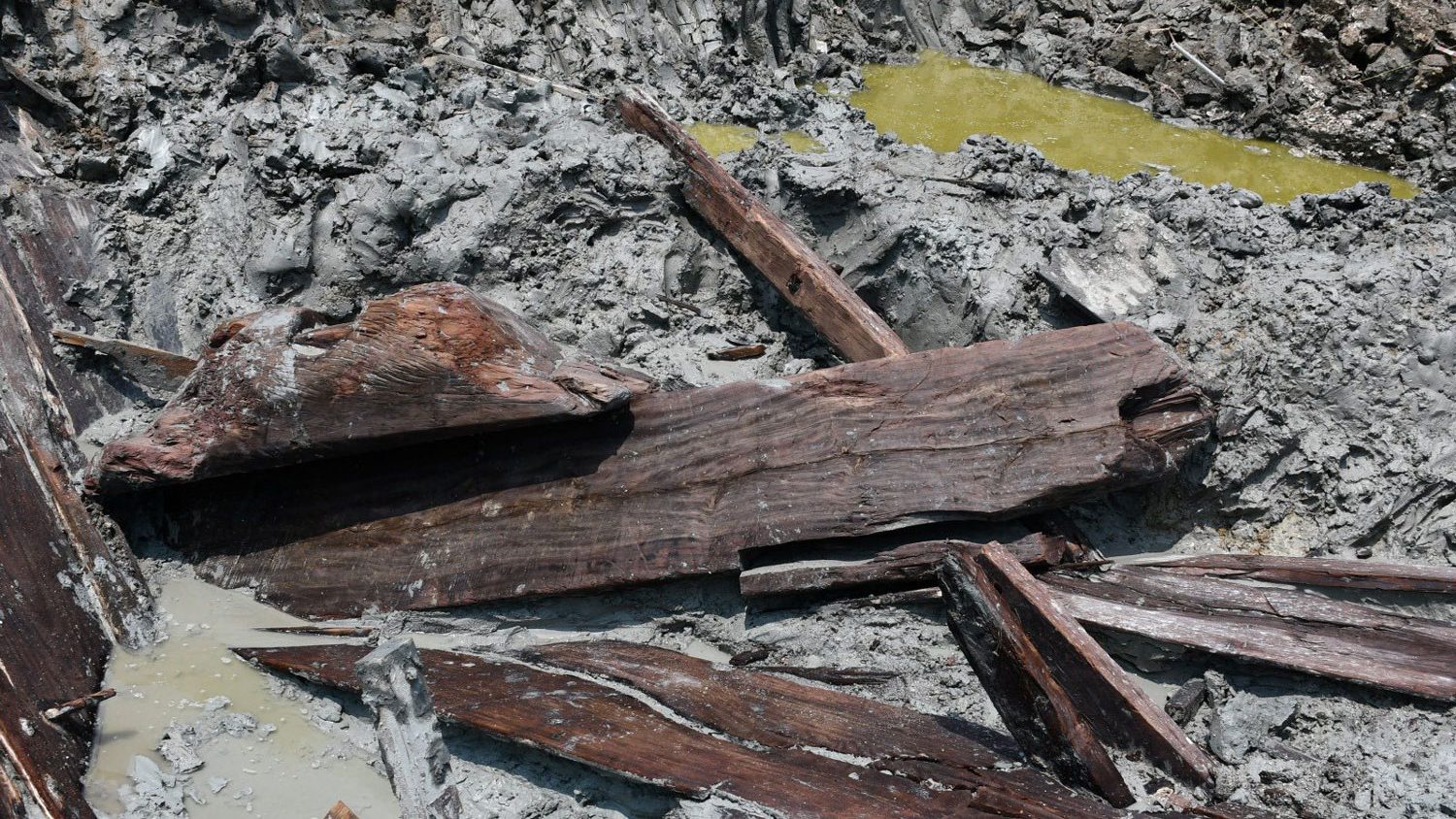
On a windswept construction site off Pulau Melaka, excavators uncovered the first hints: unusually long timbers emerging from wet, dark soil, a pattern too deliberate and too linear to be driftwood. By the third week of work, the scale became undeniable. What they had found was the skeleton of a ship.
A very large ship.
Archaeologists and heritage officials reported early length estimates between 50 and 70 metres, far larger than the regional merchant vessels and warboats typically associated with pre-colonial Malacca. Carbon-dating samples, according to preliminary reports released to local media, placed the wood broadly within the medieval period, roughly the 13th century. Some sources suggested an age between 800 and 1,200 years.
A ship of this size, built of saga, merbau, and other local timbers, was not what the textbooks predicted.
“It forces us to rethink what we thought we knew about Malay shipbuilding,” one heritage official said when the story broke. “This is not a small coastal craft. This is something on the scale of state ambition.”
The Legend Revisited

The Hikayat Hang Tuah, compiled centuries after the fact, describes the Mendam Berahi with an unmistakable sense of awe:
● A ship built on royal orders, in utmost secrecy
● A hull massive enough to carry warriors, envoys, musicians, and royal gifts
● A vessel meant not for war alone, but for spectacle and diplomacy
● A feat of engineering that proclaimed Malacca’s prowess to the world
For decades, scholars dismissed the description as exaggerated courtly flourish. They pointed out that the type of ghali-like galley depicted in the text reflected post 16th-century maritime design, suggesting that storytellers inserted later technological concepts into an earlier historical moment.
But the Pulau Melaka discovery complicates this neat dismissal.
If a colossal wooden ship really sat in Malaccan waters during the medieval period, constructed of local timber, with a hull form that early excavations suggest could have supported multiple decks, then the idea of a Mendam Berahi-type vessel becomes less fanciful.
It shifts from impossible to plausible.
The Ship that Shouldn’t Exist
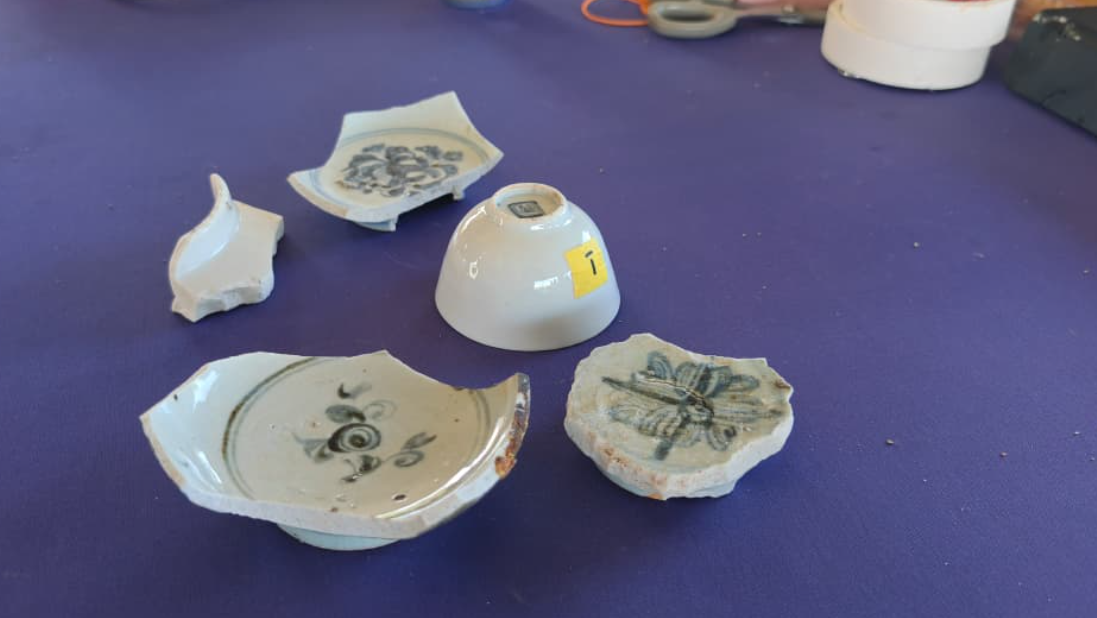
The finds from the excavation site deepen the mystery.
Early images and site reports mention:
● Ceramics found nearby, hinting at active trade routes
● Coins and metal objects possibly linked to port activity
● Hull timbers arranged in a curvature consistent with a very large, ocean-going vessel
● Structural beams thicker than those normally used for regional perahu or lancaran
One archaeologist, speaking off the record, described the site as “the sort of thing you read about in the Sejarah Melayu and assume is poetic licence, until you see the wood in front of you.”
A Region of Giants
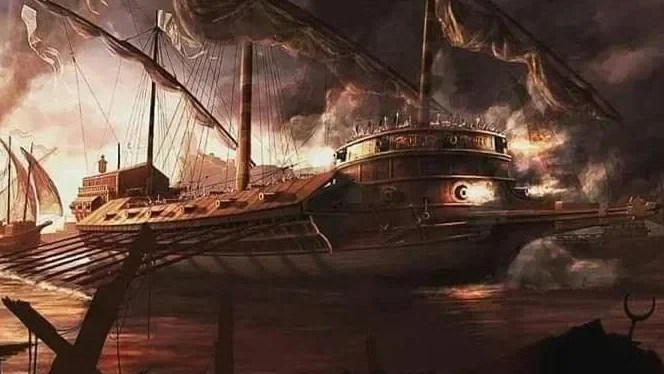
It is easy today to underestimate Southeast Asia’s maritime engineering. Yet Chinese records describe enormous Javanese ships visiting Southern China as early as the 13th century. Arab chroniclers wrote of “the greatest ships in the Indian Ocean” coming from the Malay Archipelago. The Majapahit empire, which preceded Malacca, is widely believed to have built hulking multi-mast jong measuring well over 60 metres.
So perhaps the real anomaly was never the Mendam Berahi.
Perhaps the anomaly was our forgetting.
When Myth Meets Mud
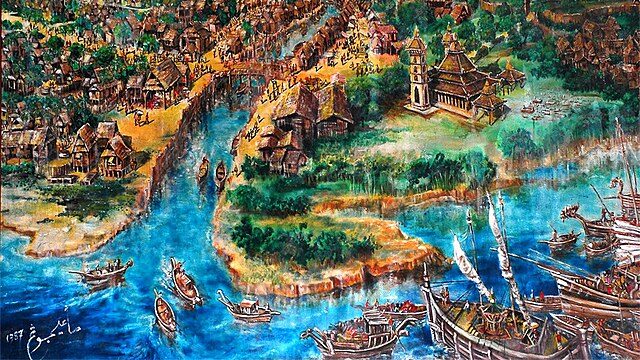
To be clear, no responsible historian would claim that the Pulau Melaka ship is the Mendam Berahi. The dating, the hull form, the artefacts, everything still requires meticulous study, and may yet reveal a vessel built centuries too early, or too late, or for entirely different purposes.
But what this discovery does is gentler and more profound.
It re-opens a door.
It says: Malacca could have built a ship like that. They had the timber, the shipwrights, the maritime culture, and the political will.
And suddenly, the Mendam Berahi is no longer a fantasy gilded onto an epic.
It becomes a rumour of reality.
A story told by people who remembered something, perhaps dimly, perhaps embellished, about a ship so monumental it merited a name that survived centuries: the Suppressed Desire, the ship too grand for its time, the ship that vanished.
The Return of a Lost Sovereignty
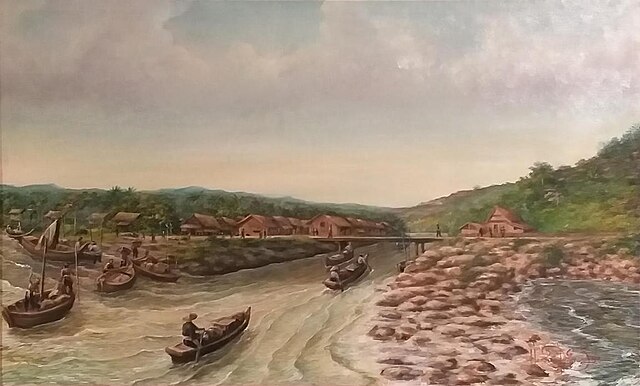
Malacca today is peaceful, tourist-filled, a place of cafés and old battlements. But beneath its sidewalks and condominiums lie strata of a cosmopolitan maritime world, one that blended Malay traders, Arab merchants, Gujarati financiers, Javanese shipbuilders, Chinese diplomats, and regional sailors whose names are lost to time.
The discovery on Pulau Melaka is more than an archaeological curiosity. It is a reminder that this port once commanded a world of tides.
And if somewhere in that world a royal ship once stretched its shadow across the Straits, carved from ancient forests and built for kings, then the Mendam Berahi would not merely be a legend.
It would then be a memory resurfacing.
A desire no longer suppressed.
 The Indigenous Narrative