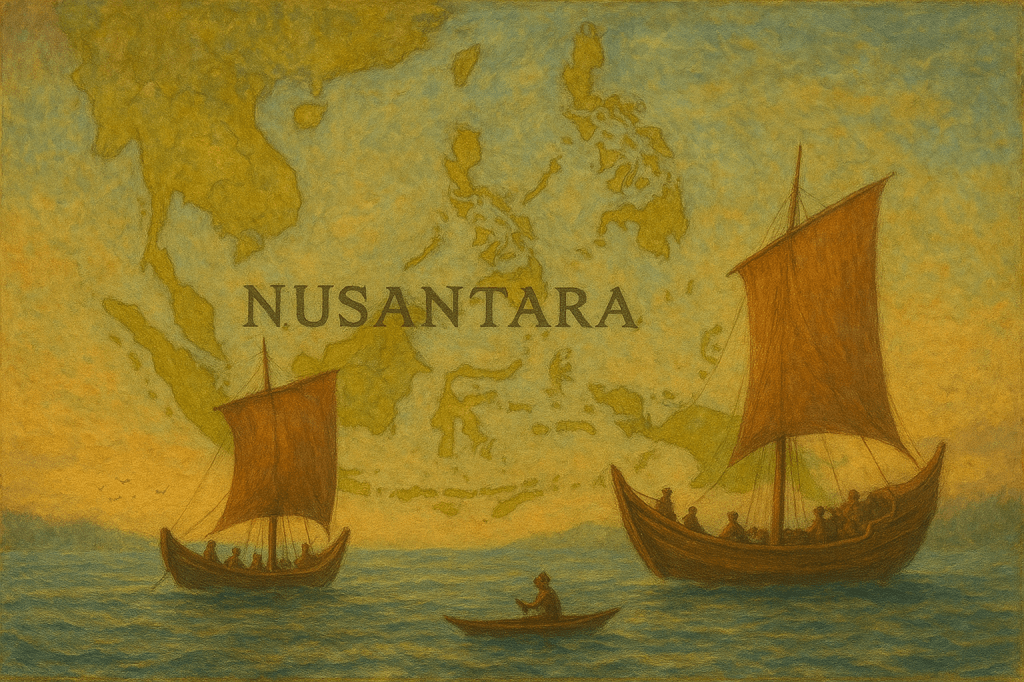
For nearly half a century, the world has been taught a strangely disempowering idea: that Austronesian peoples, the ancestors of Malays, Indonesians, Filipinos, and Polynesians, were not truly native to their own region. According to the familiar “Out of Taiwan” model, these populations supposedly sailed down from Taiwan around 4,000 to 5,000 years ago, rapidly replaced earlier inhabitants, and spread their languages across half the planet.
It is a neat story. It is also built on outdated evidence.
A growing body of genetic, archaeological, and paleoenvironmental research now challenges the Taiwan narrative and instead points to something far more grounded and far more empowering: Austronesians emerged from the Nusantara itself, the vast island world of ancient Sundaland.
The Old Land Beneath the Waves
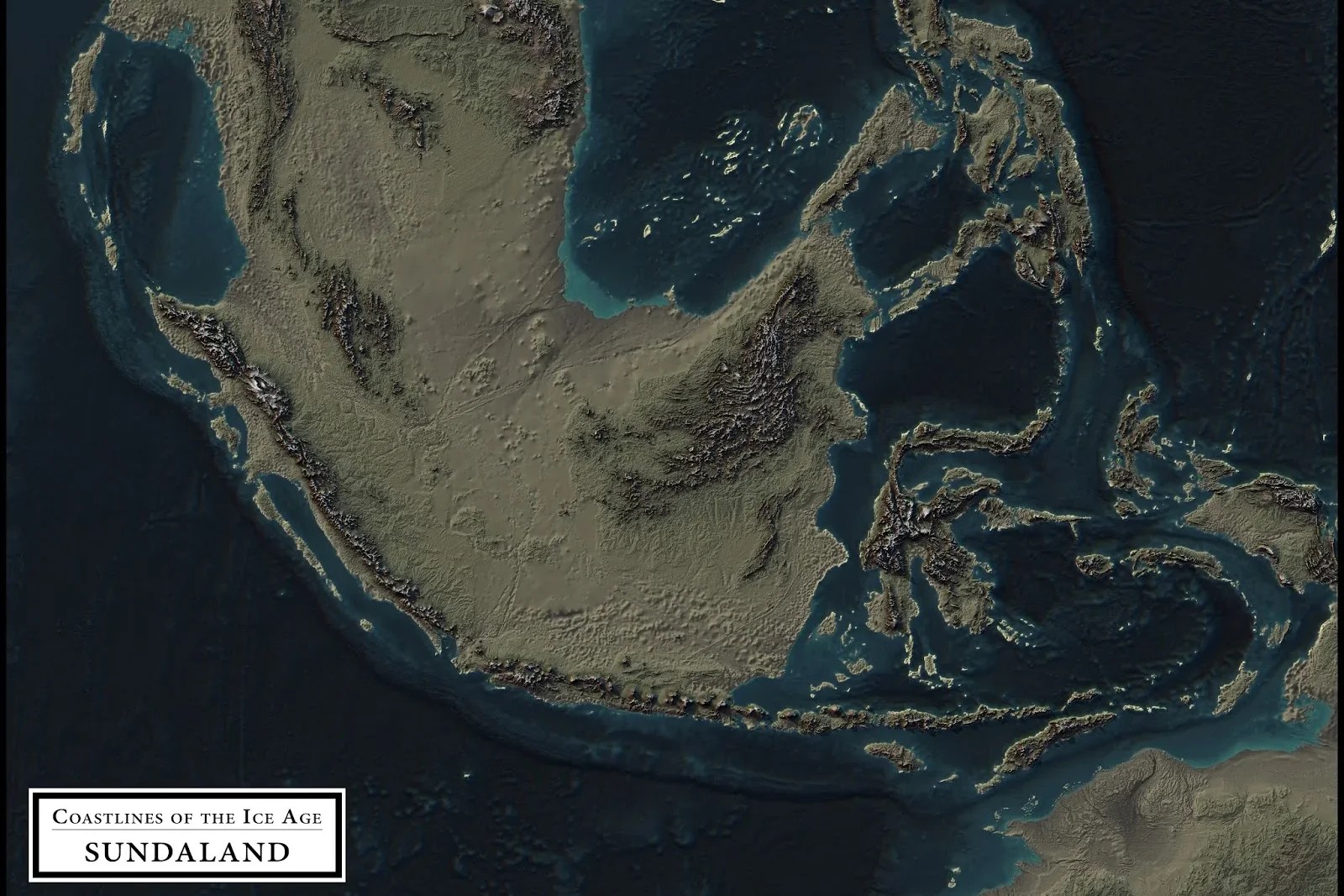
Long before Taiwan existed as an island, the region now known as Indonesia, Malaysia, Singapore, and western Philippines formed a huge Ice Age landmass, Sundaland. Early seafarers lived here at least 40,000 years ago, long before pottery and agriculture reached Taiwan. This is the earliest and richest archaeological cradle of maritime innovation in Asia, making it peculiar to claim the Austronesian seafaring tradition began elsewhere.
Genetics: The Theory’s Unraveling Thread
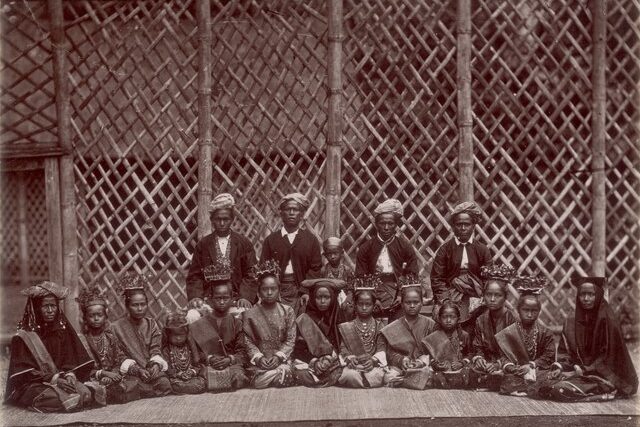
Modern genomics has delivered the strongest blow to the Taiwan hypothesis.
A landmark population-wide study in 2014 found that many island groups, especially in western Indonesia, carry deep Austroasiatic ancestry, originating from mainland Southeast Asia, not Taiwan (Lipson et al., 2014). This ancestry is older and more pervasive than the Taiwanese component, contradicting any claim of a clean, dominant migration wave from Taiwan.
Meanwhile, ancient DNA from Vietnam, Laos, and Malaysia shows that early southern populations migrated northward into Taiwan, not merely southward from it (McColl et al., 2018). In other words, Taiwan itself was shaped by older Southeast Asian populations, hardly the hallmark of a homeland.
Genetically, the Taiwan first model fails the simplest test: if Austronesians came from Taiwan, Taiwanese Aboriginal DNA should be the oldest and strongest layer across the region. It is not.
Archaeology Cannot Save the Taiwan Model

Proponents once pointed to red slipped pottery and early rice as proof of a Taiwanese homeland. But subsequent excavations show these cultural markers had multiple origins across the Philippines, Sulawesi, and Borneo, some older than Taiwan’s Neolithic layers(Bellwood, 2017). The idea of a single pottery trail from Taiwan to the Pacific has collapsed under newer data.
More importantly, maritime tools and settlement patterns in Island Southeast Asia predate comparable finds in Taiwan by tens of thousands of years. The people of the Nusantara were master navigators long before Taiwan’s Neolithic cultures formed.
The Linguistic House of Cards
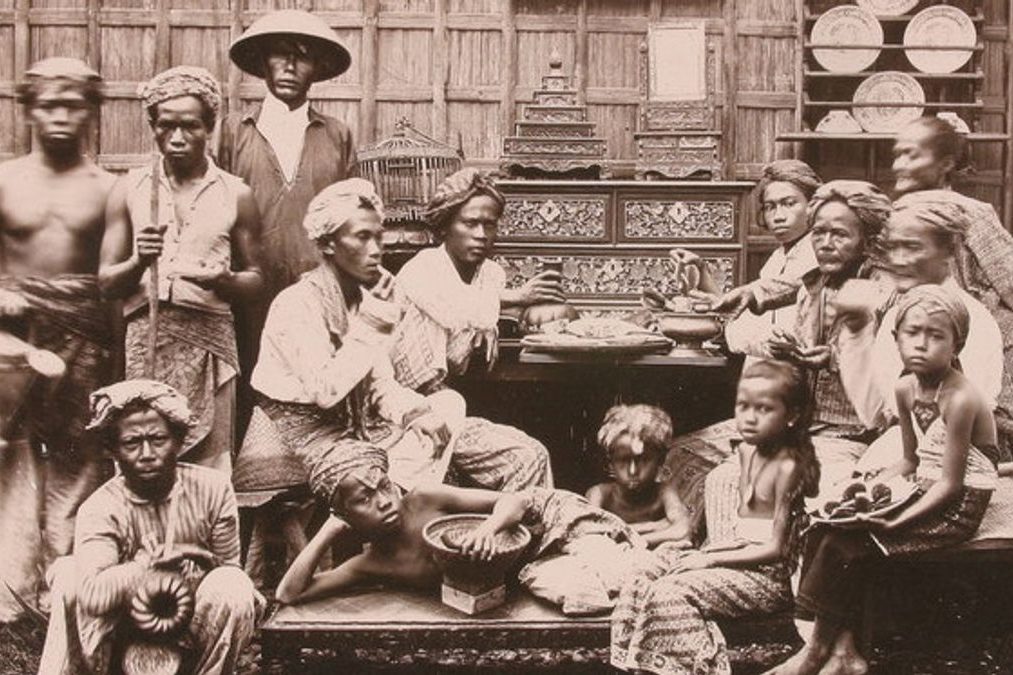
Linguistics has long supported the Taiwan hypothesis, but even here cracks are visible.
Deep linguistic branching in Taiwan is often cited as proof of homeland status. Yet linguists now caution that branching patterns can also be produced by language shift, loss, and contact, especially in regions with intense inter-island mobility (Gray et al., 2009). When languages travel through archipelagos, they fragment rapidly, creating the illusion of deep origin points.
In short, language alone cannot settle this debate.
The Nusantara Theory Fits the Facts
Unlike the Taiwan model, the Nusantara homeland theory explains every major line of evidence:
● deep maritime cultures rooted in Sundaland
● multi-layered genetic ancestry older than Taiwan
● northward genetic flow into Taiwan
● widespread Austroasiatic and Austronesian intermarriage across island Southeast Asia
● cultural continuity from Indonesia and the Philippines to Polynesia
Under this model, Austronesians formed from diverse communities in Southeast Asia, coastal hunter-gatherers, early farmers, and seafaring traders, who interacted, married, and adapted as rising seas reshaped their homelands. From here, they expanded outward across the Indian and Pacific oceans.
Taiwan becomes one chapter, not the opening page.
Reclaiming the Story
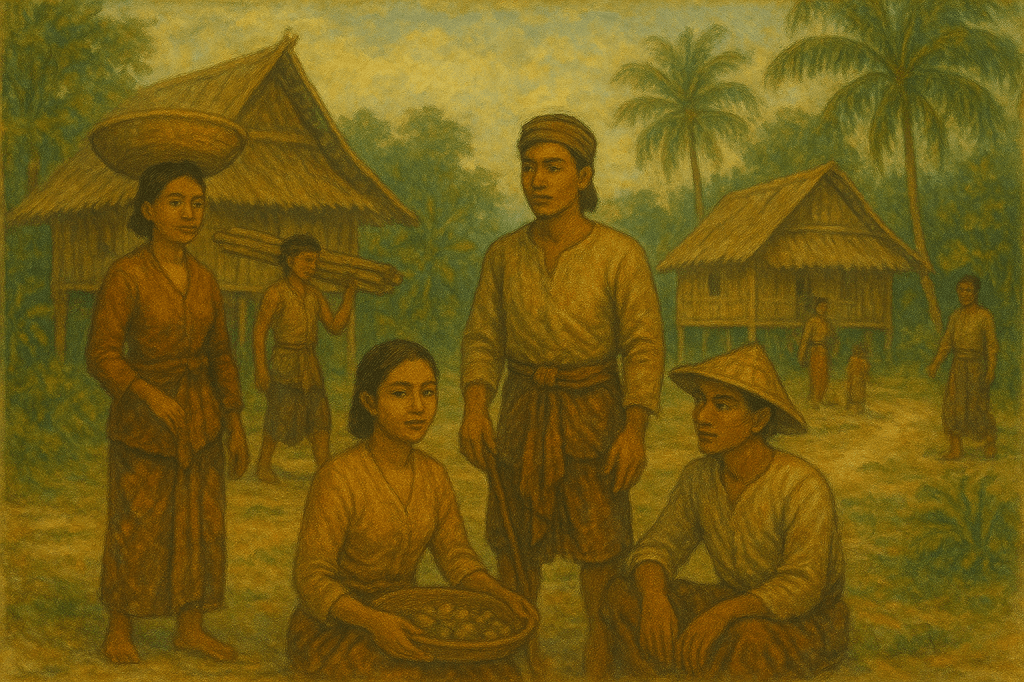
Austronesian history is not a tale of outsiders entering Island Southeast Asia. It is a story of indigenous innovation, born in the drowned river valleys and coral coasts of the Nusantara, one of the most ancient maritime civilizations on Earth.
The evidence is shifting. The narrative must shift with it.
 The Indigenous Narrative