
A professor from Universiti Malaya recently went viral for a bold statement that caught the attention of both scholars and social media users: the Malays taught the Romans how to build ships.
At first glance, this claim seems extraordinary. The Malay world and the Roman Empire were separated not only by vast oceans but by entire continents and cultures. Yet, the professor’s remarks ignited widespread debate, and even made headlines in foreign outlets far beyond Southeast Asia.
For many, it reignited interest in the long-overlooked sophistication of the Malay maritime tradition, a tradition that, for centuries, defined the region known as the Nusantara.
A Maritime Civilization

Long before European colonial powers arrived, the Malays, descendants of the Austronesian seafaring peoples, were already masters of the seas. From Sumatra and the Malay Peninsula to the islands of Borneo and Sulawesi, they built ships that connected not only Southeast Asia but also the Indian Ocean and Pacific worlds.
The Austronesians, who emerged thousands of years ago from the islands of Southeast Asia, were among the first humans to perfect open-ocean navigation. They built vessels that could sail vast distances guided only by the stars, wind, and currents. These innovations would later give rise to the great maritime kingdoms of the Malay Archipelago, including Srivijaya, Majapahit, and Melaka, which flourished through sea trade and naval dominance.
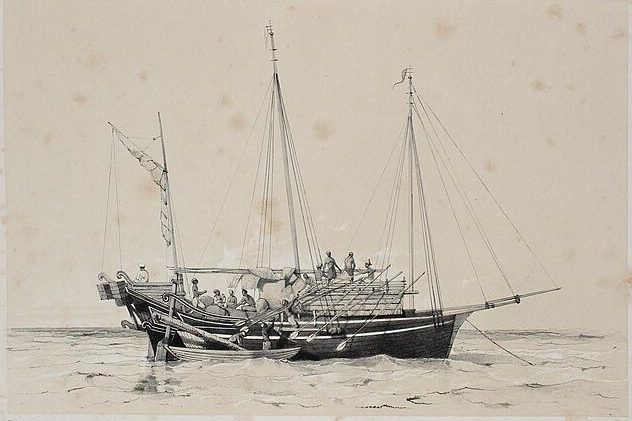
Malay ships such as the jong, lancaran, and penjajap were engineering marvels. Constructed from tropical hardwoods like teak and chengal, they used a distinctive lashed-lug technique, where planks were bound together with natural fibers and wooden dowels – without a single iron nail. This flexible method made the hulls strong yet supple, allowing them to endure rough ocean swells during long voyages.
Their large rectangular or triangular sails, woven from palm fiber or cotton, caught the wind efficiently, giving Malay vessels both speed and stability. These ships were not just modes of transport; they were symbols of identity, craftsmanship, and connection across the seas.
The Roman Connection, and Misconnection
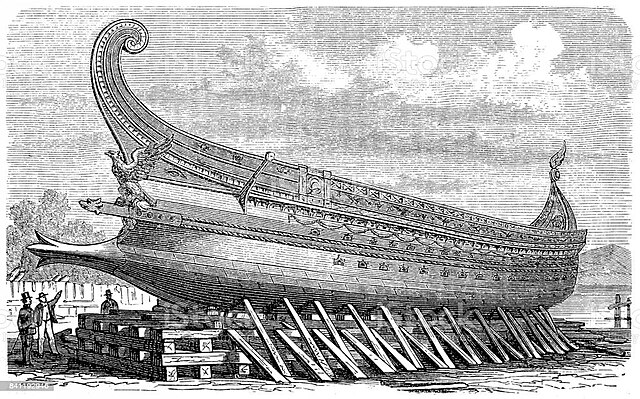
Meanwhile, the Romans were also a maritime power, but their expertise was largely inherited. The Romans were originally land-based people who learned much of their shipbuilding from the Phoenicians, Greeks, and Carthaginians, civilizations that had long dominated the Mediterranean.
Roman ships such as the trireme and quinquereme were designed for war and control, emphasizing speed and maneuverability for ramming and boarding enemy vessels. Built with mortise-and-tenon joints and iron nails, often from oak or pine, they were rigid and heavy —suitable for the calm, enclosed waters of the Mediterranean but unsuited for the unpredictable open seas.

By contrast, Malay ships were built for endurance. Their designs reflected an oceanic world where survival and commerce depended on adaptability. They could travel thousands of miles, linking distant ports from Madagascar to Micronesia.
There is no historical evidence that the Romans and Malays ever met, nor that the Romans borrowed shipbuilding techniques from Southeast Asia. The Mediterranean and Indian Ocean worlds existed in parallel, occasionally linked by trade through India, but separated by vast geographical and cultural distances.
A Matter of Pride and Perspective
Even so, the professor’s statement reflects something deeper: a growing desire among Malaysians and Southeast Asians to reclaim their maritime legacy, one that has often been marginalized or overshadowed by Eurocentric narratives.
For centuries, Western historians credited European explorers with advancing seafaring technology, overlooking the fact that the peoples of the Nusantara mastered navigation, shipbuilding, and ocean trade long before the Age of Exploration began.

Today, as researchers uncover shipwrecks, ancient ports, and linguistic links across the Indian Ocean, a clearer picture is emerging, one that places the Malay and Austronesian sailors among the great navigators of the ancient world.
Two Civilizations, Two Seas
Comparing Malay and Roman ships highlights how each civilization adapted its technology to its environment.
The Romans built for dominance within a bounded sea. The Malays built for survival and connection across open oceans. The difference in purpose and geography shaped their engineering.One was for war and empire, the other for exploration and exchange.
Roman ships embodied rigid power. Malay ships embodied organic designs that are flexible, sustainable, and in tune with nature. Both represent remarkable human ingenuity, but in profoundly different contexts.
The Real Lesson
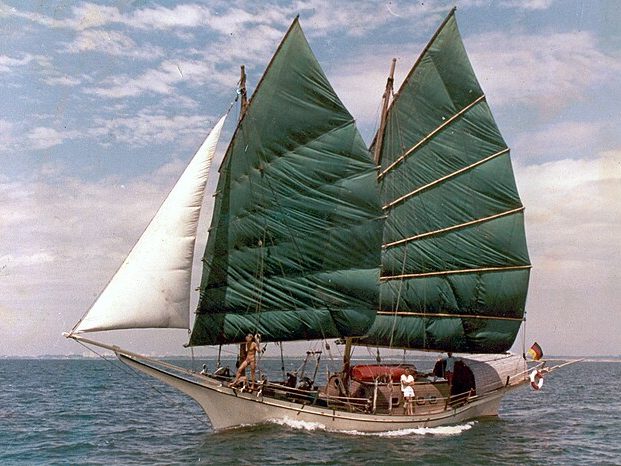
So, did the Malays teach the Romans how to build ships? Almost certainly not. But the question itself reminds us of something more important: that Malay civilization, too, stood among the world’s great maritime powers, and that its story deserves to be told alongside those of Greece, Rome, and Egypt.
The seas have always been the heart of Malay identity. The ships they built were more than vessels; they were moving testaments to a people whose history was written on the waves, long before any Roman galley set sail.
 The Indigenous Narrative